Linguistic Intonation Is Best Described as a Variation in Sound
Could anyone please let me know about my take on them. The reason for this had been to describe well-known Indo-European languages many of which used to have long written histories.
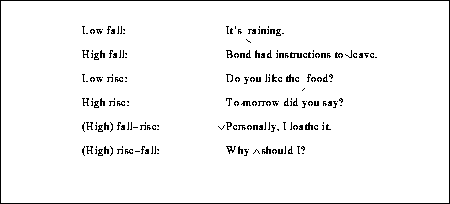
Intonation
Intonation refers to a combination of acoustic parameters including duration intensity and pitch used to communicate discourse meaning.
. Intonation is the impression that is described from emotional condition. Intonation is a second component of prosody that listeners may exploit when discriminating languages. In music timbre also known as tone color or tone quality is the perceived sound quality of a musical note sound or tone.
The former is best described using gradual declination from a mid-high pitch to a low pitch as a baseline with possible variation along the parameters of pitch height range and slope. All languages seem to make some use of intonation or pitch. Asked Feb 2 2017 in Anthropology Archaeology by FluffyNut.
However when the ball reached the wall the ball appeared to roll through it. These variables were first analysed for BAS in Enbe Gurlekian and Tobin 2006 which reveal a variation in the intonation patterns of speakers of different ages and genders an important topic in current linguistic and sociophonetic research. Question 34 Houdini is a normally developing one-year-old watching a magic act.
The magician he is observing has just rolled a ball into what looks like a solid wall. Pitch is the quality that makes it possible to judge sounds as higher and lower in the sense associated with melodies. Cross-linguistic variation in intonation is modelled in AM theory in terms of differences in i the inventory of possible types of pitch accents and boundary tones and ii the range of permitted associations of tonal events to metrical structure.
Intonation is the ups and downs of the voice in speaking. Intonation conveys differences of expressive meaning eg surprise anger wariness. Tones are revolution of pitch in the voice that serves difference of language ton in words.
In linguistics intonation is variation in spoken pitch when used not for distinguishing words as sememes a concept known as tone but rather for a range of other functions such as indicating the attitudes and emotions of the speaker signalling the difference between statements and questions and between different types of questions focusing attention on important elements. According to research findings by Baillargeon one would expect that Houdinis most likely reaction would involve Answer s. February 8 2022 What best describes an unsubsidized federal loan QA February 8 2022.
The pitch of a sound is determined not only by the tension of the vocal folds but also by. Linguistic intonation is best described as a variation in sound length. It deals with the whole sentence Whilst Inflection is the stress put on a specific word within a sentence.
Other prosodic aspects such as rhythm tempo or loudness fluctuations were not included in this study. The former is best described using gradual declination from a mid-high pitch to a low pitch as a baseline with possible variation along the parameters of pitch height range and slope. Intonation is the pitch accuracy of a musician or musical instrument.
Intonation in phonetics the melodic pattern of an utterance. Surprise and the. Its function in language is to distinguish meaning.
Question 5 1 1 pts Linguistic intonation is best described as a variation in sound comprehension. Lindenfelds 1969 study of linguistic variation in France. A higher onset was noticeable in interrogatives as opposed to declaratives.
The intonation and tones are related to the pitch of linguistic items. The aim of this paper is to demonstrate that variation in the intonation patterns of spoken arabic dialects is likely to provide similarly rich input to theories of intonational phonology and to make a case for a particular methodological approach to the analysis of intonation namely use of a multi-level corpus comprising a range of speech. Indicators of an innate understanding of appearance as reality.
Intonation is primarily a matter of variation in the pitch level of the voice see also tone but in such languages as English stress and rhythm are also involved. There is some evidence in favor of this notion and some that goes against it. Sound is the tension of the vocal folds and we might imagine that the speech centers achieve a pitch pattern by producing a particular sequence of vocal fold tensions.
The actors use many kinds of dictions such as register and jargon automatically. In linguistics intonation refers to the variation of pitch and stress when pronouncing words. Intonation is defined in this context as pitch or F0 fluctuations over time.
Question 6 1 1 pts Piaget argued that the first reactions by newborns were indicators of an innate understanding of object permanence. Pitch is heavily connected with stress in languages that have stress. It is more about the words of a sentence And both can change the whole meaning of a sentence.
Linguistic intonation is best described as a variation in sound a. Internal reconstruction is the method by which an element that contains a certain meaning is re-used in different contexts or environments where there is a variation in either sound or analogy. See Page 1.
When you want to sound superconfident you can even lower your intonation midsentence. It is different from tone the systematic use of voice.
What Is Intonation Quora
Sequences Of Intonation Units Form A 1 Hz Rhythm Scientific Reports

List Of Typical Intonation Curves Of Sentence Modalities Download Scientific Diagram
0 Response to "Linguistic Intonation Is Best Described as a Variation in Sound"
Post a Comment