Which of the Following Is an Active Transport Process
Specific membrane proteins are required but no energy is needed. If a channel.
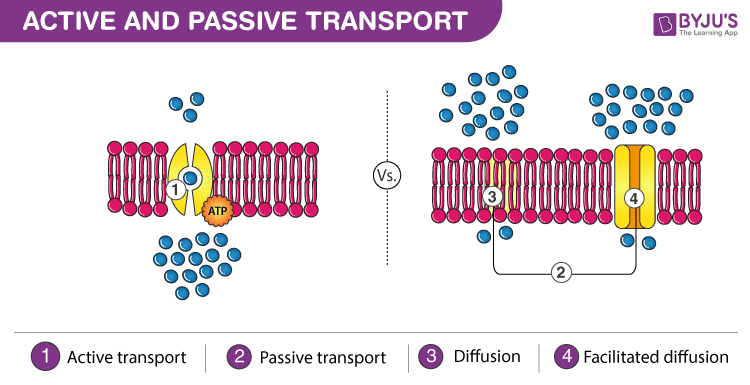
Difference Between Active Transport And Passive Transport
Maintain the cellular membrane.
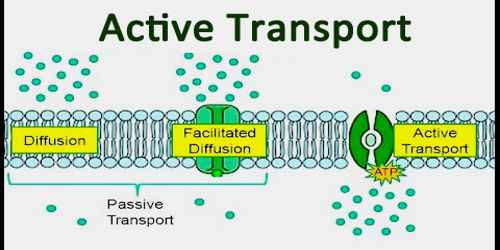
. However the cell often needs to transport materials against their concentration gradient. Active transport makes use of carrier proteins commonly located on the cell membrane to facilitate the transport of substances. None of the above.
Primary active transport moves ions across a membrane and creates a difference in charge across that membrane which is directly dependent on ATP. Solute movement across the membrane is toward the. Which of the following is NOT a part of the active transport process.
None of the above. This is very important in the kidney which is frequently. Secondary active transport does not directly require ATP.
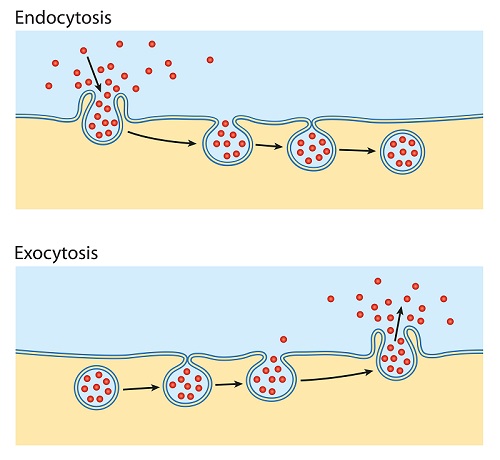
Active transport process where a cell engulfs materials with a portion of the cells plasma membrane and releases the contents inside of the cell. We review their content and use your feedback to keep the quality high. Ion pumps or the channels are required in case of active transport where metal ions are transported.
The two kinds of. Phagocytosis is an active transport mechanism that ingests particles through sacs formed from the cell membrane. 100 1 rating Answer 1 Endocytosis is an active transport process because endocytosis is the.
Regulate the uptake and removal of materials. List the active transport processes. A type of active transport that moves substances including fluids and particles into a cell.
It is a passive process. In some cases the movement of substances can be accomplished by passive transport which uses no energy. Secondary active transport does not directly require ATP.
-Against an electrochemical or concentration gradient. The transport process is classified as primary active transport since it uses ATP as an energy source. This lesson covers the following objectives.
An active transport process by which materials are expelled from a cell. -Does require ATP energy from the cell. It is usually powered by ATP.
It can be either primary or secondary. Only small nonpolar molecules are transported. The action potential where the cells of the human body carry out an electrical process called the sodium potassium pump ATPase.
Active transport is the movement of molecules or ions against a concentration gradient from an area of lower to higher concentration which does not ordinarily occur so enzymes and energy are required. What type of molecule is transported across the cell membrane during osmosis. Active transport in plants.
Examples of active transport include the Sodium-Potassium Pump primary transport the Naglucose symporter secondary transport and endocytosis and exocytosis. The sodium-potassium pump which transports Na and K into animal cells is one of the most essential pumps. You will be quizzed on the types of active transport and how each process works.
Quiz and Worksheet Goals. Active and passive transport are important processes that help the cell. Calcium pump in the cell membrane where a carrier protein works with ATP to absorb extracellular calcium.
With the enzyme oriented towards the interior of the cell the carrier has a high affinity for sodium ions. Active transport is a process that is required to move molecules against a concentration gradientThe process requires energy. Instead it is the movement of material due to the electrochemical gradient established by primary active transport.
Active transport is the process of transferring substances into out of and between cells using energy. Which of the following is a characteristic of active transport. A gradient produced by the combined forces of the electrical gradient and the chemical gradient.
There are two types of active transportation mechanisms Primary active transport and Secondary active transport. Active transport is a very important process enabling cells to accumulate molecules or ions from the environment against the concentration gradient. Instead it is the movement of material due to the electrochemical gradient established by primary active transport.
The process consists of the following six steps. Which of the following is NOT a part of the active transport process. The process of active transport requires the most direct use of A characteristic common to both diffusion and active transport is that Which of the following is an example of active listening.
Exocytosis endocytosis and sodium-potassium pump are a few examples of active transport. Phagocytosis pinocytosis receptor-mediated endocytosis. When the molecules are transported against the concentration gradient from the region of lower to higher it is known as active transport.
There are two types of Active transport. The process of endocytosis and exocytosis are utilized by all the cells for transportation of molecules which cannot passively permeate via the membrane. Conversely contents of cells heavily loaded with electrolytes or metabolic products can be excreted against the concentration gradient.
Cells and Body Systems Biology practice 1. The method of transporting material that requires energy. Change size and shape.
Primary active transport moves ions across a membrane and creates a difference in charge across that membrane which is directly dependent on ATP. As sodium ion concentrations build outside of the plasma membrane because of the action of the primary active transport process an electrochemical gradient is created. Active and passive transport processes are two ways molecules and other materials move in and out of cells and across intracellular membranes.
In these cases active transport is required.

Active Transport Biology I
Active Transport Assignment Point

Active Transport Features Types And Significance
Active Transport The Definitive Guide Biology Dictionary
0 Response to "Which of the Following Is an Active Transport Process"
Post a Comment